

The Subtle Power of Architecture to Shape How We Live
Updated: Apr 5

How Home Design Supports Healthy Habits
A well-designed home does more than shape how a space looks or feels—it can shape how you live, day after day. Emerging research in environmental neuroscience shows that the built environment influences behavior: how we sleep, eat, move, connect, and restore ourselves. When architecture is thoughtfully designed, it can reduce friction in daily routines, making healthy choices feel natural.
Rather than prescribing lifestyle changes, residential design can quietly reinforce habits that support long-term health and well-being. dSPACE Studio explores this potential through a personalized design process, aligning each home with a client’s goals and daily patterns. Seen this way, the home becomes a powerful framework for healthy living—one that works in the background of everyday life.
Designing for Movement and Fitness
Behavior change is seldom about motivation. As anyone who has skipped the gym on a rainy day or grabbed a doughnut on the run knows, convenience matters—proximity and ease are often the deciding factors.
Architecture can make healthy choices easier.
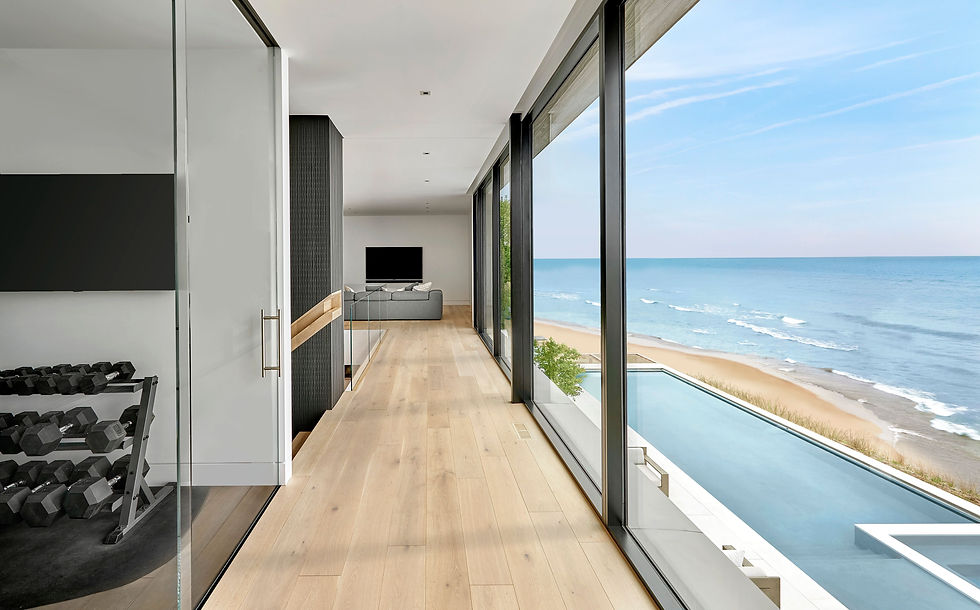
One example is the home gym. Rather than being tucked away, fitness spaces thrive in prime locations—filled with natural light, oriented to views, and integrated into the home’s circulation. At Horizon House, dSPACE Studio located the gym along the path to the primary bedroom. You pass it every day.
This matters. When the home gym is visible, inviting, and easy to access, the likelihood of exercising increases. The goal is not to force behavior, but reduce friction.
There are trade-offs. Using premium space for a gym requires intention, and equipment aesthetics can be a concern. But these are design challenges—not barriers.
The same principles extend beyond gyms—to pools designed for lap swimming, sport courts, or simply making it easier to grab a bike without wrestling it from ceiling hooks in the garage.

Architecture also shapes movement in everyday life. In dSPACE homes, stairways are designed as architectural elements—artful, filled with light, and oriented toward views or outdoor spaces. When stairs are inviting, they encourage incidental movement throughout the day, supporting long-term health and wellness without feeling like exercise.
How kitchen design shapes eating habits
The same logic applies to dietary habits: kitchen design can play a surprisingly influential role in what we eat each day—and can be tailored to support your lifestyle and priorities.
In dSPACE’s project Dunelands, the kitchen and adjacent hospitality spaces are designed to support the client’s goals by making healthier choices visible and convenient. Open displays for fruit and nutritious snacks, a hydration station with ready access to filtered water, and discreet storage for less healthy options align daily habits with long-term wellness.

The character of the kitchen also matters. Artful, carefully planned spaces make cooking more appealing by emphasizing clarity, ease of use, and efficient cleanup. When cooking environments feel calm, functional, and beautiful, they naturally invite participation.
Outdoor kitchens extend this experience by bringing cooking into fresh air and daylight, deepening the relationship between food and place. Personal herb gardens and edible landscapes can bring fresh ingredients into daily routines. When meals are prepared and shared outdoors, they become more social, more intentional, and more closely tied to the rhythms of nature.
Together, healthier eating, shared meals, and time spent outdoors form a powerful foundation for well-being and longevity—an idea increasingly supported by research in environmental neuroscience and neuroarchitecture.

Beyond diet and exercise: How design shapes everyday well-being
Diet and exercise are among the most visible ways architecture can support healthy living, but they are only part of a bigger picture. Home design also influences how we sleep, connect, focus, and restore—behaviors that are equally important to long-term health and well-being.
Sleep may be the most overlooked—a growing body of research now links good sleep to improved cardiovascular health, metabolic function, cognitive performance, and longevity. Sleep quality is shaped by light, sound, and spatial organization.
In dSPACE projects, homes are carefully oriented to daylight and have a clear separation between active and restful zones to support healthy sleep patterns. Acoustic buffering, reduced ambient noise, and calming material palettes further reinforce rest and recovery—details that are difficult to retrofit, but especially powerful when addressed early in design.
Social connection and restoration are similarly shaped by space. dSPACE homes balance openness with refuge through well-scaled living areas, flexible use spaces, and outdoor rooms that foster togetherness, conversation, and everyday rituals—while still preserving places for retreat. Reading nooks, window seats, and quiet rooms with natural light encourage slower, screen-free activities, making reflection and focus easier to sustain.

Engagement with the outdoors ties these behaviors together. Integrated outdoor spaces—gardens, courtyards, and terraces—encourage time spent in nature not only for movement, but for restoration and reflection. When outdoor spaces are designed to be lived in rather than simply viewed, connection to nature becomes part of everyday life.
Together, these strategies point to a broader idea: architecture does not simply respond to how we live—it shapes how we live. Well-designed homes can quietly support healthier, more balanced living over time.
The home as a partner in healthy living
Health and wellness are shaped by the small, repeated rhythms of daily life—habits around diet, movement, and lifestyle that, when sustained over time, cultivate a sense of vitality and well-being. Whatever your goals for living well, a thoughtfully designed home can support you. Good architecture can be a partner in healthy living, fostering a lifestyle that enhances everyday life.
dSPACE Studio approaches modern residential design with this long view in mind, creating personalized environments that feel intuitive, supportive, and livable. The result is homes that support your health—where everyday routines become a foundation for longevity and living well.
Written by Gregory Brisson, MD, FACP
Internal Medicine physician
Wellness Consultant to dSPACE Studio
Photography by Ty Cole and Tony Soluri
Styling by Cate Ragan


Comments